

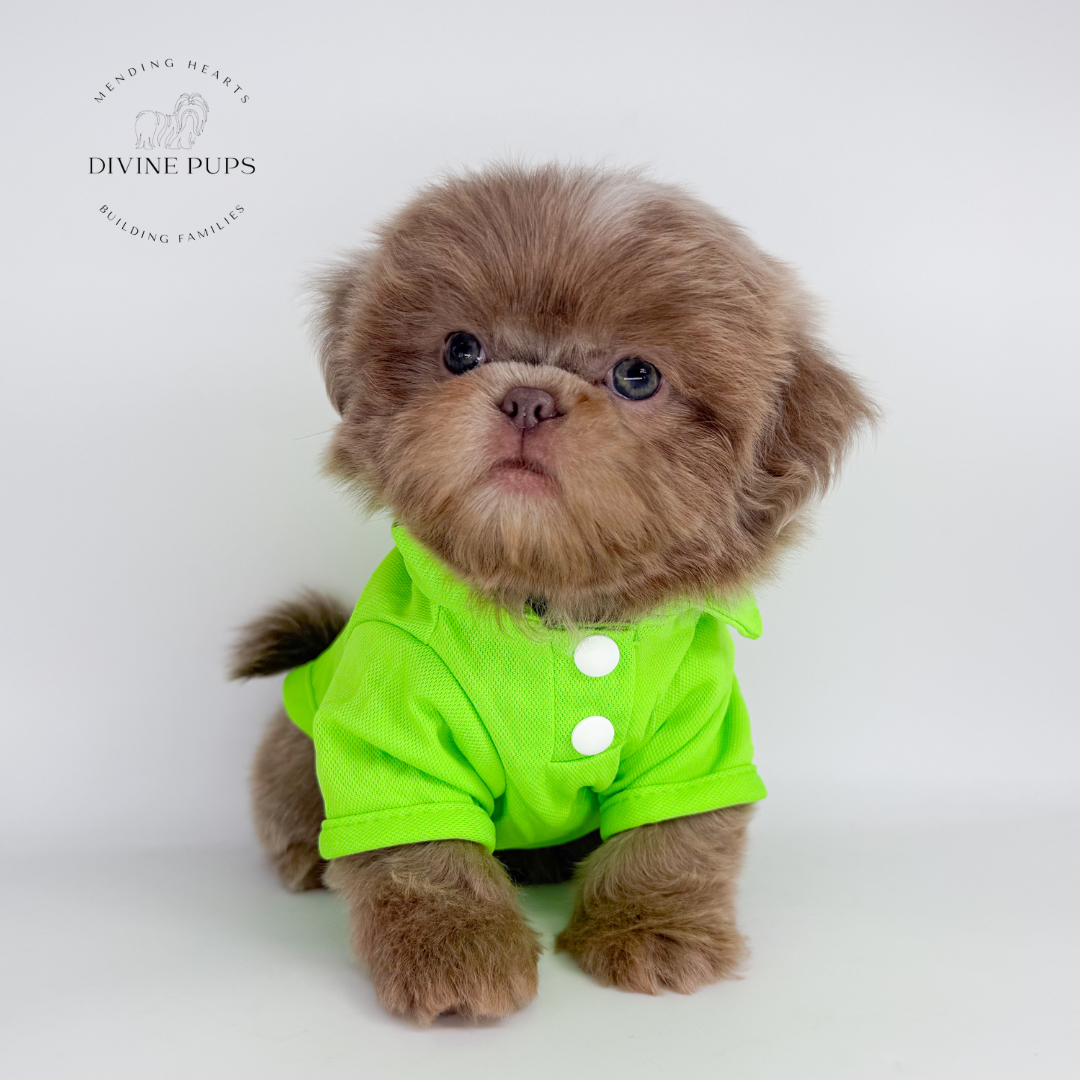
There are few moments more exciting than bringing home a Shih Tzu puppy. After weeks—or sometimes months—of anticipation, your newest family member is finally home. You have prepared the toys, purchased the food, set up the crate, and imagined what life will be like with your new companion. It is a day filled with excitement, hope, and the beginning of a relationship that will hopefully last for many years.
While families naturally focus on the excitement of welcoming a puppy home, it is easy to forget that your puppy is experiencing one of the biggest changes of their young life. In a single day, they leave behind everything they have ever known. Their mother, littermates, familiar smells, daily routine, sleeping area, and the people who have cared for them since birth suddenly disappear. Instead, they find themselves in a completely unfamiliar environment with new people, new sounds, new rules, and new expectations.
At Divine Pups, one of the most common questions we receive from new owners is whether a particular behavior is “normal” during those first few days or weeks. The answer is almost always yes. Whether you are bringing home an eight-week-old puppy or welcoming an older puppy into your family, every dog goes through an adjustment period. Understanding what that adjustment period looks like and how your actions influence it can make all the difference in helping your puppy develop into a confident, emotionally stable adult.
Every Puppy Experiences Change Differently
One of the biggest mistakes new owners make is expecting every puppy to adjust exactly the same way. Social media often paints an unrealistic picture of puppies immediately running through the house, confidently exploring every room, and instantly bonding with their new family. While that certainly happens for some puppies, many others need time before their true personality begins to shine.
Temperament, genetics, previous experiences, resilience, and even individual personality all influence how a puppy responds to change. One puppy may confidently march through the front door and immediately investigate every corner of the house. Another may choose to quietly observe from beside your feet before gradually venturing out to explore. Neither response is better than the other—they are simply different coping styles.
This is one of the reasons temperament testing is so valuable. At Divine Pups, we evaluate each puppy individually because every puppy processes the world differently. Some traits are deeply rooted in genetics and remain relatively stable throughout life, while others are highly influenced by environment and experience. To learn more about the qualities we evaluate before matching puppies with their families, we invite you to take our Shih Tzu Temperament Quiz and explore our temperament testing process.
Understanding your puppy’s natural temperament allows you to set realistic expectations instead of comparing them to another puppy with an entirely different personality.
The Emotional Side of Bringing Home a Shih Tzu Puppy
Many owners assume that puppies experience change the same way people do. In reality, puppies do not understand why their world suddenly changed, they simply know that it has.
Imagine waking up tomorrow in a completely different country where you do not recognize the people around you, your home is unfamiliar, your daily schedule has disappeared, and every sound, smell, and routine is different. Even if everyone around you is kind and welcoming, you would probably feel uncertain for a while. That is very similar to what your puppy experiences during those first several days.
Because of this, it is perfectly normal for puppies to show temporary changes in behavior. Some puppies eat less than usual during the first day or two. Others sleep much more than expected because their brains are processing an enormous amount of new information. Some become unusually clingy, following their new family everywhere they go, while others appear more independent and spend time quietly observing before actively engaging.
These temporary behaviors should not immediately be viewed as permanent personality traits. More often than not, they are simply part of the adjustment process. As your puppy begins to feel secure, you will often see their true personality emerge.
Why Routines Create Security
One of the greatest gifts you can give your new puppy is consistency. Dogs thrive on predictable routines because routine reduces uncertainty. Once a puppy begins to understand when meals happen, where they sleep, when they go outside, and what is expected of them, their confidence naturally begins to grow.
This is why we encourage families not to spend the first week constantly changing schedules or introducing too many new experiences all at once. Although it is tempting to invite friends and relatives over to meet your new puppy, remember that your puppy has already experienced enough change for one week. Allowing them time to settle into their new home first often results in a much smoother transition.
Consistency also extends to training. Puppies learn through repetition. Using the same cues, maintaining similar daily routines, and responding calmly to mistakes helps create a predictable environment where learning can occur. A puppy that knows what to expect each day spends less energy worrying about their surroundings and more energy building confidence.
The First Three Days Are About Observation, Not Perfection
One of the most unrealistic expectations placed on puppies is the idea that they should immediately know how to behave in a completely new environment. Potty accidents, interrupted sleep, changes in appetite, or moments of uncertainty are not signs that something has gone wrong—they are simply signs that your puppy is adjusting.
During those first seventy-two hours, your primary goal should not be perfect obedience or flawless house training. Instead, your goal should be to build trust. Allow your puppy to explore at their own pace, keep training sessions short and enjoyable, and celebrate small successes. Every positive interaction helps your puppy learn that this new environment is safe.
Many families are surprised to discover that their puppy seems quieter than they were during visits at the breeder’s home. This is completely normal. Confidence often takes several days—or even several weeks—to fully return after such a significant life change. Once puppies begin to understand that this is their new home and that their new family consistently meets their needs, their personalities often blossom in wonderful ways.
The First Three Weeks: When Your Puppy Starts to Settle In
As the days turn into weeks, most puppies begin to establish a sense of security. They recognize familiar faces, understand where they sleep, anticipate mealtimes, and begin learning the rhythm of daily life. This is often when owners say, “Our puppy is finally starting to come out of their shell.”
It is also common for families to notice new behaviors during this stage. A puppy that seemed quiet may suddenly become playful and adventurous, while one that appeared reserved may begin initiating games and seeking more interaction. This is not because their personality has changed. Rather, they finally feel comfortable enough to express who they have always been.
Patience during this stage is incredibly important. Trust is not built overnight. It develops through hundreds of positive interactions that teach your puppy they are safe, loved, and understood.
Older Puppies Often Need More Time
A common misconception is that an older puppy should transition more easily because they are more mature. In reality, the opposite is often true.
Older puppies have had more time to develop routines, establish relationships, and become comfortable in their previous environment. While their additional maturity often allows them to learn new routines quickly, emotionally they may need a little longer to process the transition.
Fortunately, older puppies also tend to settle beautifully once trust has been established. Owners simply need to allow enough time for that relationship to develop naturally rather than expecting instant adjustment.
Helping Your Puppy Build Confidence
Confidence is built through positive experiences, not by rushing a puppy into overwhelming situations. While early socialization is important, it should always be thoughtful and age appropriate. Introduce your puppy to new people, places, sounds, and experiences gradually, allowing them to investigate at their own pace.
Organizations like the American Kennel Club also emphasize that positive, carefully managed socialization during puppyhood plays a critical role in helping dogs become confident adults. You can learn more by reading the AKC’s Puppy Socialization resources.
Remember that your puppy is constantly learning from every experience. Calm leadership, predictable routines, and positive reinforcement help create resilience that lasts a lifetime.
Final Thoughts
Bringing home a Shih Tzu puppy is one of life’s most exciting milestones, but it is also the beginning of a relationship that takes time to develop. Every puppy, regardless of age, experiences a period of adjustment as they learn to trust their new family, understand new routines, and discover that they are safe in their new environment. During these first days and weeks, patience, consistency, and realistic expectations are far more valuable than striving for perfection.
At Divine Pups, we believe that successful transitions begin long before a puppy ever leaves our home. Through intentional breeding, early socialization, age-appropriate experiences, and comprehensive temperament evaluations, we work to provide every puppy with a strong foundation. However, once your puppy comes home, you become the most important influence in shaping their future. The way you respond during this adjustment period can have a lasting impact on your puppy’s confidence, resilience, and ability to thrive.
If your new puppy seems quieter than expected, sleeps more than you anticipated, or takes a little time to settle into your family’s routine, remember that these behaviors are often a normal part of the transition. Give your puppy the gift of time, provide consistent leadership, and allow trust to develop naturally. Before long, you’ll begin to see the personality that was there all along emerge with confidence.
Coming Up in Part Two
In Part Two of this series, we’ll take a closer look at what happens after your puppy begins to settle into their new home. We’ll explore how confidence, sound sensitivity, touch tolerance, nerve strength, and other adjustable temperament traits can begin changing almost immediately after a puppy joins your family. You’ll learn why these traits are so heavily influenced by everyday experiences, how owners can unknowingly strengthen—or weaken—them, and practical ways to help your Shih Tzu continue developing into a confident, emotionally stable companion.
Understanding this next stage is one of the most important steps in raising a well-adjusted puppy, and it’s where your role as an owner truly begins.


